
Confirm the jurisdiction, project type and proposed receiver before relying on an outlet. Corpus Christi distinguishes grading, public right-of-way work, qualifying island development and construction groundwater discharge. Portland has a separate review context. A nearby curb, inlet or ditch is not automatic permission for a private connection, and not every repair follows the same approval path.
This guide supports grading and swales and commercial drainage. It summarizes documented questions for project review, not a permit determination for an unseen property. Requirements should be confirmed with the responsible authority for the actual work. No permit fee or approval time is promised here.
Identify the work and the property authority
Describe whether the proposal involves cleaning, repairing a private line, changing grades, adding impervious coverage, connecting to public drainage or working in right-of-way. Those are different activities. Include the property address and the location of the work rather than relying on a broad service-area name.
The Portland brief explains why Corpus Christi instructions should not be copied to that jurisdiction. Portland’s development context can also involve a separate drainage authority in applicable circumstances. Ask which office reviews the specific scope and what information it needs before the contractor prices a route that depends on an unconfirmed connection.
Put grading review into the scope
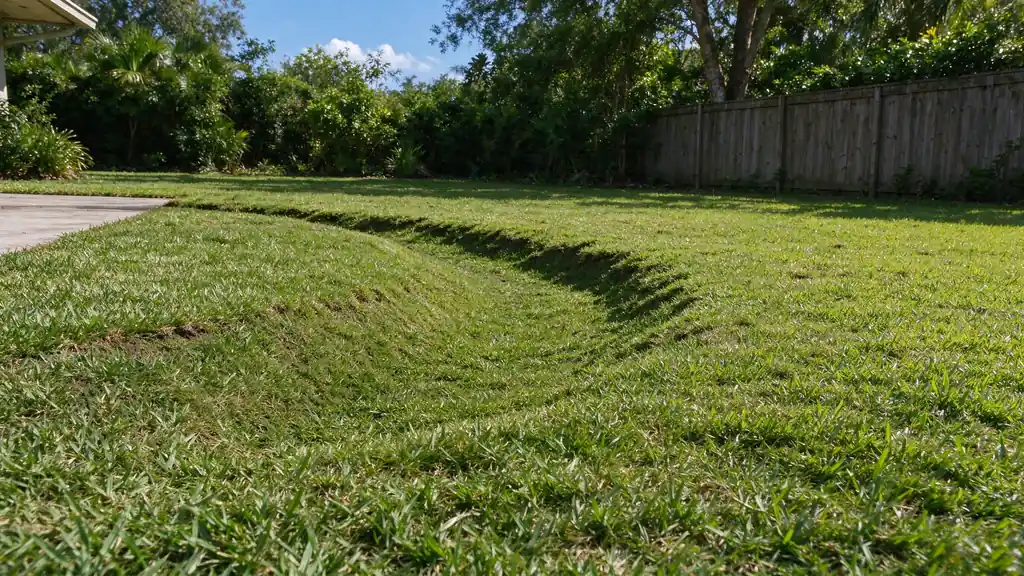
Corpus Christi’s flood-risk guidance directs owners to obtain a permit for regrading a lot away from buildings. That statement supports a project-specific grading question; it should not be rewritten as a claim that all small drainage repairs require identical documents. Describe the proposed surface change and how it meets unchanged ground, buildings and neighboring flow.
Use the grading service and neighbor-runoff guide to prepare the technical questions. Existing easements, historical routes and receiving conditions may affect the available arrangement. An approval question should be resolved before new levels are treated as a fixed construction instruction, not left until machinery is already on the property.
Recognize qualifying island-development requirements
The city’s IB008 bulletin describes qualifying island infill work, including new construction and additions increasing impervious coverage, while distinguishing unchanged-footprint remodels. It addresses pre-construction drainage information, approved discharge, historical neighboring flow and final-grade verification in its applicable scope. It does not support a blanket statement that every island drain repair needs the same surveys.
The North Padre Island brief explains the local decision. Ask whether the actual project qualifies and which current submissions apply. Coordinate the building, paving and drainage responsibilities so required levels and documentation are not assumed to belong to another contractor. A previous plan is context, not proof that a changed project has been approved.
Confirm public right-of-way and connections
Corpus Christi provides a distinct right-of-way review context. A curb cut, street connection or work beyond the private lot should not be silently included as ordinary yard drainage. Establish ownership and authorization for the receiving feature. A lower-looking public inlet does not establish that it is available or suitable for private discharge.
The driveway and patio service explains where private hardscape can meet public infrastructure. Ask the proposal to identify the limit of work, approval responsibility and any public-interface construction. Quay’s scope excludes municipal civil works; a private estimate should not imply responsibility for increasing public drainage capacity.
Keep construction groundwater separate
City construction guidance describes authorization for groundwater discharge to the municipal stormwater system, including receiving-water and pollution considerations. That is a construction dewatering question. It is not blanket permission to send ordinary yard runoff into any visible storm drain or a substitute for confirming the final permanent outlet.
For commercial or larger work, disturbance circumstances and a larger common plan can also affect construction controls. Do not apply a subdivision-scale statement indiscriminately to every small repair. The commercial service keeps those questions tied to the actual site. Ask how temporary water, sediment and the final route are handled as distinct parts of the plan.
Retain decisions with the written scope
Record the authority consulted, documents required, approved receiving arrangement and who supplies each item. Identify what remains unresolved and how that affects price or construction. The estimate checklist helps compare those responsibilities rather than comparing two totals that stop at different approval boundaries.
The cost guide does not publish an unverified permit fee or assume a local incentive. The installation guide explains how the approved route connects to excavation, checking and finish. A clear record makes it easier to preserve the intended arrangement when later paving or landscaping changes are proposed.